Showing posts with label Daredevil. Show all posts

22 March 2017

March Badassness 2017: ELITE EIGHT is here!

Every week we get closer to naming a Champion in the 2017 March to Badassness!! After a heated round of 64 of the toughest, bruising-est fighters we've ever seen in this tournament, we're down to the Top Eight. These match-ups are tough:

(1) Samuel L. Jackson, #1 Movie Star of All Time vs. (3) Frank "The Punisher" Castle for rights over the Sherwood Division

(8) Dr. Peter Venkman, Columbia University vs (6) Bartholomew M. Quint of the Orca battling in the LV-426 Division

(9) Rey vs. (3) General George Smith Patton, Jr, Commander of the United States Third Army to be crowned Champion of the Z-City Division. Yeah, Rey is just Rey. Which is pretty badass in its own right.

(1) Jet Li vs. (2) Aragorn, Son of Arathorn, King of Gondor for the title of the Green Place Division.

Vote your ass off until March 29th!


22 March 2016

Daredevil vs. Flash - The Effects of TV Getting More Comic Book-y

I didn't really care for the first season of Netflix's Daredevil at all. Besides the lackluster production values and shoddy acting, it seemed to never pace itself well and the episodes felt like they took forever to complete. I'd literally be depressed when I saw that the next installment was an hour long. I'll refine these criticisms later, but despite all this, I was looking forward to Season 2, which dropped last week, mostly due to the introduction of The Punisher, which has been a favourite hero of mine since the time I realized that guns are cool. What followed was what should have been expected - I loved every single Punisher scene but the rest of the show drags itself through shit.

I want to compare this to CW's The Flash because even though the shows are tonally 180° from each other, they both followed this general idea of becoming more and more like their comic book counterparts after establishing audience buy-in. Both shows tried really hard to ground themselves in reality and then go totally out of control with insane comic book plotlines that make no sense in a rational universe. This is a tough line to walk, and granted both Daredevil and The Flash walk that line very well, without ever losing suspension of disbelief. So, let's talk a bit about both shows.
"M'ask you somethin..."

Daredevil is intriguing because of its subtle use of magic through the nefarious secret ninja association, The Hand in the latter half of Season 2. I recall how worried pundits were about the Marvel Cinematic Universe incorporating the magic of Thor's world into the "grounded" world of Iron Man, although the conceit should rather be that it takes exactly as much suspension to believe a man can build an advanced metal suit as it is to believe in a magic hammer. That is to say, all of the periphery isn't really what grounds the universe - it's consistent tone, aesthetics, and characterization which completes the universe. The coming introduction of Doctor Strange (2016), which I believe everyone hopes will be off-the-wall bonkers has a similar fear, that magic will disrupt a Universe based in logic, but that's a fallacy. It will neither be disruptive, nor is there actually anything to disrupt. What Daredevil and The Flash have proved, as soon as the audience is on board, you can push just about anything.

The Hand in Daredevil is really a show of comic book insanity, and demonstrates how modern adaptations aren't afraid to stay pretty close to their source material. Recalling the Ben Affleck Daredevil (2003) (which I'll still defend), the film stuck to a lot of action film conventions, and while it dropped subtle comic book hints, more or less stuck with a realistic, if stylized plot, at least in the sense of favoring convention over weirdness. Comic book plots are inherently serialized, but also tend to be convoluted, intricate, steeped in jargon, inter-connected with other simultaneous stories (a 1960s Stan Lee innovation born out of a need to keep track of everybody), and bathe in a nerdiness born out of deep world-building, establishing iconography, and fostering cultural obsession. Daredevil and The Flash as they lean more into these sorts of stories more than earlier superhero films did. Notably, this is also a feature of more recent successful comic book films. It's amazing that true comic book film success was emulating their originating medium rather than applying the conventions of their new medium.

In my diatribe against Daredevil last year I made some cogent arguments, but with a whole other season to refine my thoughts I think I've figured some stuff out a little better. I made a passing reference that if the show was 42-minutes on FX it'd be a lot better, and after seeing this on other Netflix show, I'll contend that throwing away the length requirement is a huge detriment to these shows. Showrunners are now allowed to indulge themselves, ignore the positive effects of tight editing, and pass it all off as a "slow burn" show. There's nothing wrong with slow burns, but Breaking Bad and Better Call Saul still actually have stuff happen each episode. There's a sense of looser reigns, which seems great for artists, but that contention also makes it seem like successful producers and network executives have always stood in the way of great television. That idea would purport that there has been no great TV ever. That's sort of an insane assessment, and some sort of system of checks should be implemented for streaming shows that suddenly find themselves without restriction or inhibition.

Daredevil Season 2 still has a lot more tell than show, which is partly why the generally silent Punisher is such a welcome addition. Like his role of Shane on The Walking Dead, Jon Bernthal's character quickly establishes himself as the most interesting dude on the screen, through a combination of his barely-suppressed rage, high level of perceived righteousness, and the general showiness of the role. It's pitch-perfect casting, even though I'm also a fan of the Tom Jane interpretation, particularly "Dirty Laundry."
King Shart!

Let's steer back towards The Flash for a second, which I actually had compared last time. It's interesting that these shows have become parallels for each other, perhaps because they both feature dudes in red suits kicking ass with their friends. The Flash keeps spinning into supreme nerdiness, though, often wearing its goofiness on its sleeve, yet so covered in heart and charm that it's instantly forgivable.

After a string of semi-plausible heroes and villains, The Flash started pouring on what would seem impossible for mainstream superhero viewing. Gorilla Grodd. King Shark. Earth-2. These are the kind of pulp villains and scenarios no one should take seriously, but it works in part because comic fans have been taking Grodd seriously for decades, and because the relationships between the characters is so solid that despite all the zaniness going on around them, you always believe their struggle.

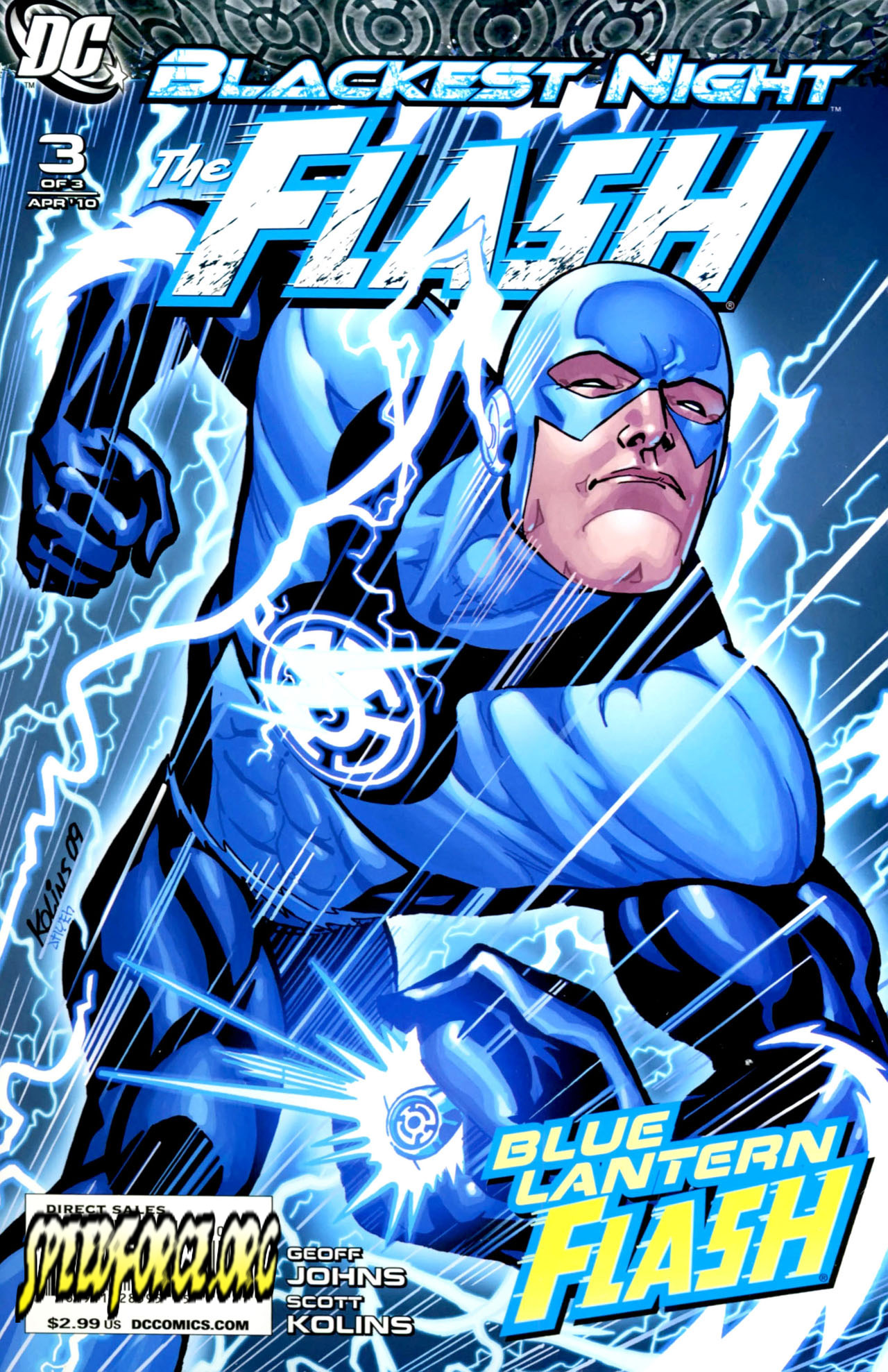
It'a a strong caveat that every Flash episode is actually the exact same. Barry's going fast...a new metahuman shows up and finds a way to beat him...in order to beat the metahuman Barry must go...EVEN FASTER. I'm not sure how speed is the answer to literally every problem they face, but thank goodness it is! Again, though, all these flaws are pushed to the background because of how well the show relishes its own tone which is equal parts sincere and doofy. There's a reason why Barry Allen was conscripted into the Blue Lantern Corps (now who's nerdy...) - it's all about hope.

As both these shows lean into their source material, the better they get. It's as if they have thrown off the shackles of shame that we perceived pulpy comic stories to have all these years and they're fully embracing their intricate, obscure, and convoluted weirdness. The Flash actually does it with enough surface level junk to render paying close attention less meaningful while Daredevil fosters enough buy-in through traditional action scenes to bypass possible clashes in world-building.

What do you think of these shows? Which one succeeds more?

14 April 2015

Daredevil, or as I call it, A Terrible Law & Order Starring Batman but He's Poor and Blind

I want to wade some tricky waters here, because I really think that exporting Daredevil to Netflix was a great move for just about everyone involved except for, apparently, me directly. That is because I really really hated this fucking show. At the same time it's great for Marvel to continue expanding their Universe into the street-level heroes, and shining a light on Marvel Knights is basically as huge of a jump at this point as it was introducing the cosmic sections of the Universe with Guardians of the Galaxy (2014).
And yes, this is pretty cool.

It's also a great movie for Netflix. It's a confident assertion that they will continue to be an outlet for shows that are unsuitable for broadcast television, which is also kind of bizarre because I'm sure that's the same conversation show producers were having when edgy or niche shows started bolting Network TV for Cable twenty-five years ago. The credibility is still there, though, and although Daredevil could have easily worked on F/X or something, and probably would have succeeded more as a 42-minute show than a 56-minute one, I love all original streaming content mostly for the fact that it exists and is thoroughly shaking up stodgy industry paradigms which is lovely.

People seem to generally like Daredevil as well, for reasons that completely escape me. It's been well-received critically and made a decent impact in our pop culture splash. Take a gander of the gamut, mostly praising the show for its "grittiness" in contrast to the typical splash 'n' flash of Marvel's Cinematic Fare. While watching this, though, I was struck by one thing in particular that knocks this down the middle - Daredevil totally feels like a DC Movie. And The Flash totally feels like a Marvel movie. What the hell is going on.

I have never understood why Warner Bros can't get their act together around a shared DC Movie Universe. Their animated universe went strong for fourteen years, ending with Justice League Unlimited in 2006. There have been other shared animated universes since then, and a loose movie continuity, but it's all greatly surpassed anything Marvel has attempted. Moving more on TV, the interweave between Arrow and The Flash has been nearly seamless. Why do they screw movies up so badly?

For some reason, DC prides its films as "serious art" or something, which is really just a painful relic from Nolan's Batman films, which were too damn good and made too much money for Warner Bros to ever try something different. I may chalk up the relative goofiness inherent to The Flash as being its timeshare on the CW, which makes it constantly feel like a weird mix of teen drama, superhero show, and police procedural. It has recently really started plunging off the deep end with its time travel, speed force, and all that crap, but it only got there by first grounding its characters in a sustainable reality that more often favored rationalizing these goons instead of camping them up. It was a successful measure for a show that's turned as wacky as The Flash.

The Flash isn't afraid to crack a joke, though. Daredevil is. Seriously, Daredevil (2003) was funnier with Ben Affleck at the helm. I like to speak at length why certain big movies fail over others, but one thing I don't quite understand is how Dardevil (Affleck) has been so derided over the years. I really think there is just this total hatred of Ben Affleck, especially 2003 Ben Affleck. Lately the son of a bitch has had a bit of a McConaughey thing going on, in the sense that he's transformed from this douchey, airhead, romantic comedy/trite action hero persona into this lauded, Academy Award-winning guy. And isn't it odd that Affleck has won two Academy Awards but none for acting? I'm curious how people will receive his Batman, which isn't all that much of a leap from Daredevil in the first place.

But people hate, HATE Affleck Daredevil. I remember really digging it in theaters, but I do think that had something to do more with me being a 16-year old who thought it was a slick picture than it being really worthwhile of any merit. I do still like Colin Farrell in that movie (which I know, is something a crazy person would write) and Michael Clarke Duncan is a way better Kingpin than Vincent D'Onofrio. The film had a lot of really "gritty" parts, though, even if a lot of it was melodrama and director, Mark Steven Johnson doesn't really have a clear voice or sense of what he wanted the movie to be.

So here I am, in 2015 arguing against the Daredevil TV show and for the Daredevil movie. Hell yeah. And I should clarify, because I don't think that movie is really good in the sense that it is a life-changing movie or anything, and above all else it serves as a relic to an age where we didn't know what a superhero movie could be (which, if you look at something like The Winter Soldier [2014] or Guardians, the answer is, a superhero movie can be any genre of movie). The TV show is just bad, though.

As I'm watching this thing I'm constantly feeling the budget restrictions, and not really in good ways. There are plenty of excellent shows and films on shoestring budgets, and oftentimes that serves to push creativity but in the case of Daredevil it pins its characters in a room talking about law instead of out there serving it. Daredevil pours on the law heavily, but it's never in a particularly interesting or compromising way, and it always feels like it's detracting from the more interesting scenes of Daredevil kicking ass. And why is Daredevil kicking ass? His motivation other than being a dude seeking vague justice is never totally clear. It doesn't help that Hell's Kitchen has been pretty gentrified since Frank Miller's 80s days.
This is not.

Also to be clear, I don't have a problem with a superhero show being a law show. Hell, let's get a tight Jennifer Walters show going. I also don't really have a problem with maudlin, gritty superheroes, even if that concept has been totally overblown since the success of Nolan's Batman and the idea that these people are out there fighting crime as vigilantes in tights and the whole thing should be taken really seriously and to the letter is nuts. Again, The Dark Knight (2008) actually tackled this idea - one of the many reasons why it's a good flick. But the self-seriousness isn't even that huge of a problem and it's certainly not Daredevil's problem.

Daredevil just isn't interesting. It is completely incapable of holding my attention. Nothing seems to happen after lengthy expository discussions, and barring a few moments of genuine shock (which favors gore over surprise anyway), the proceedings are just so damn boring. So much of it feels like people talking and plotting, which isn't by itself a bad thing, but nothing really happens from all the talk. There should be some subtext, interesting plot progression, irony, or character work going on. All this is absent from Daredevil.

So, what do you think? Are you on Team Hate Daredevil with me? Do you wish for at least one Teenage Mutant Ninja Turtles reference? Or do you love this show? If so, please refute me, because I'd really like to join you.

03 April 2014

Profiles: Colin Farrell, Courage, and America

This past weekend I somehow found myself in the middle of a grueling debate over the nature of actor, Colin Farrell. I, naturally, am generally pro-Farrell, but my opponent hated the Irishman with such fervent vitriol, that my only recourse was to turn to the Internet to provide a well-connected and reasonable forum where rational debate and intelligent thought and reflection may be facilitated. Of course the Internet's the place to do that.


So, why Colin Farrell? I suppose he's been leading debates for years now. It's tough to even remember when he first became a noteworthy actor. He was kind of just appointed one, without ever proving himself. That's why our debate centered on ridiculous films that came out over a decade ago like Minority Report (2002) and Daredevil (2003). Farrell is sort of like a Jude Law or a Sam Worthington - he doesn't really have that one distinctive role that thrust him into the spotlight. Instead we were suddenly supposed to care about this random dude with good-looking leading man chops. I believe that this general disdain or apathy has unfortunately informed the public perception of Mr. Farrell since his debut.

My opponent's basic argument was firstly, that Colin Farrell's appearance in any film was never distinctive enough - that he could be played by any actor. This opinion was primarily based off things like Daredevil, though, which again is a very narrow-minded way of arguing over an actor's oeuvre, and essentially the worst part of modern Internet fan-fueled criticism. There was no convincing my opponent because he had already written Farrell off. He could not distinguish the actor Farrell from his early accepted persona, nor take out Farrell from a total work (for instance, since Farrell has a small role in Horrible Bosses [2011], therefore all of Horrible Bosses is bad), nor understand the difference between acting well with a ridiculous part (Let's go with Daredevil again), ruining what could have been a great role (let's get Alexander [2004] out of the way), or just true, true complete shit (Miami Vice [2006]). All of this is anemic to true, unbiased critical appreciation of films, which in turn limits the scope of what movies you'd be inclined to watch and enjoy.

In my counter-argument I first attempted to dig into a few choice Farrell roles that have gone culturally underappreciated or maligned with the ravages of time. When The New World (2005) came out, it was largely dismissed as a failure. This was due likely to its accepted status among critics as trite Oscar Bait, cultural fatigue over another massive attempt to make Farrell a star, and a gap between the expectations of grandiose spectacle it created vs. the natural and intimate wandering epic that Terrence Malick actually delivered. Nine years later we're able to watch The New World without all of this context screwing with our judgment and really enjoy the nuanced revisionism that Malick and Farrell put on screen.

But you're not going to win an argument this way. After Miami Vice or so I think Farrell really started to get his act together. He stopped trying to be the next big blockbuster or franchise leading man and began taking these smaller roles in less high profile films. The results were a slew of both leading and bit parts for the next five years, but the shining jewel here is really In Bruges (2008). Whenever someone says they hate Colin Farrell, mentioning In Bruges should be enough to get them to at least say "Oh yeah, I forgot about that one." He justly earned a Golden Globe for the off-beat role in this little seen "criminals-laying-low-in-Bruges" flick, that also represents a turn where Farrell took on more challenges, recognized his daft public persona, and started having a lot more fun.
Scumbag or Sex Symbol? Scum symbol.

He's recently returned to bigger filmmaking with this weird kind of prestige. No one knows how he became a big name. Honestly. Is it Minority Report and Daredevil? Because Farrell wasn't the reason anyone saw those. S.W.A.T. (2003)? Do you honestly even remember what happened in S.W.A.T.? For whatever reason, though, the man is a household name, and when he started taking some ridiculous roles in major studio films that another established actor of his standing wouldn't have touched, it's significant. The combover king in Horrible Bosses. The fucking vampire in Fright Night (2011), equally throwing weight around as the heavy villain as well as the huge acting "get," intimidating everyone with aplomb. The guts to remake Total Recall (2012). And back to the intimacy of the endlessly enjoyable romp through the narrative twists of Seven Psychopaths (2012).

I think that intimacy is what sets Farrell apart and gives him his edge. In Total Recall he's the opposite of Schwarzenegger because you can believe that Arnold really was a secret agent all along - look at him! The ambiguity inherent to the mindfuck premise becomes tried. Farrell is like watching the film remade with Jason Bourne - he has all these abilities but also a ton of fear. You get this same vulnerability on display in In Bruges, The New World, and Seven Psychopaths. He's not an action star. He's more romantic (and yes, this article won't forget this year's Winter's Tale [2014], which is notable for making the least sense of any movie ever made), cautious, and charming. It's easy to see why anyone raised on Schwarzeneggers and Stallones would balk, but that doesn't make him a disastrous lead actor. Even if you ultimately look at his box office and attest that he still hasn't really connected with audiences.

We do really need to get back to Daredevil. I'm not sure why Daredevil kept coming up, maybe it's because it's when the guy who was really cool in Minority Report who was able to go toe to toe with Tom Cruise had a big chance to be a really cool supervillain and he totally hammed it up. He broke our hearts. Daredevil tends to have this really awful reputation, but I think that's also because of the presence of Ben Affleck (try as he might, Ben can never seem to get over his pretty boy douche image - how is the memory of Pearl Harbor [2001] more potent at this point than The Town [2010]?), which is also an unfair fanboy assessment based more on acceptable public perception that articulate critical lens.

I really liked Daredevil when it came out. I was also like 16 years old and still jazzed up about seeing Spider-Man and X-Men on screen for the first time. See, that's an important moment. Daredevil was really a gutsy call - way before Iron Man was adapted, or even Batman Begins (2005). It was the darkest superhero film to date before an age where everything had to be "dark" if it was going to be cool (I don't know if we're still in that age. I think bubble gum is cool now. Is The Avengers [2012] cooler than Man of Steel [2013]?) I know I'm arguing now for liking a movie within its contemporary context, but I think that initial enjoyment kept me afloat when all the hate started pouring on.

Daredevil has the unique distinction of being an origin movie and a pretty good mid-career movie all in one. A film like Batman Begins spends just about the entire time creating all these justifications for why someone in the real world would eventually conform to the iconic imagery forged 70 years ago. Despite its genuinely profound character construction, its entire conceit of taking a comic character with extreme seriousness, is in itself, a silly prospect. Daredevil wastes no time in its origin, and then jumps to find its protagonist pretty well in his years, cleaning up the scum of Hell's Kitchen, questing whether or not he's the bad guy, balancing a personal life (or not, as Matt Murdock's lawyer alter ego is very much derived from his late night antics, seeking both legal and vigilante methods of justice), as well as getting well and confused over the right paths to take when all these crazy assassins like Elektra, Bullseye, and Kingpin show up.
Yeah he is pretty douchey

Oh yeah, Bullseye. Colin Farrell. In the comics, Bullseye is all kinds of awesome. He's super insane, never misses, and loves killing everyone all the time. That's all pretty true for the film version as well. My opponent made a big contention that Colin Farrell was really stupid because Bullseye's superpower was that he could never miss, and in the film, he misses poor Affleck's Daredevil. Neverminding that it's less a superpower, and more of a superskill, I tried to reason that that's a huge, genuinely affecting reason for the criminally insane Bullseye, who has never before met Daredevil, to become obsessed with killing him, thereby hitting his mark and proving that his power does exist. It's integral to the development of their relationship. It's as if Professor X made Magneto's powers stop working. Wouldn't a huge part of Magneto's development then be getting his powers back (Jeez, that really happened towards the end of The Last Stand [2006]). It's not exactly the same, but it's worthy motivation.

He also argued that Bullseye doesn't do anything cool and when he does, it's only important for the plot. I argued that his motorcycle flip introduction was sort of cool, which he countered saying that that's something any of Charlie's Angels (I assume the McG versions) would be able to do, and considering none of them have superpowers, Bullseye should do something cooler. As a side note, my opponent apparently hadn't seen an action movie since 2003. Also, for the record, we were now arguing about whether or not flips of motorcycles were cool. I think they're pretty cool, I dunno. Bullseye also propels a lot of the plot by (SPOILER, if you somehow have made it 11 years without seeing it and/or still care about Daredevil being spoiled) killing Elektra, but that's also a big character moment for Murdock, considering he wasn't able to reconcile with her due to Bullseye also killing her father and framing him. Still with me? Bullseye fucks up everybody in this movie, this whirling destructive psychotic force that stands against all the law and justice Murdock is trying to achieve. Murdock is Dent and Batman rolled into one and Daredevil beat The Dark Knight (2008) by five years.

So, I'm not sure if I convinced you on Colin Farrell's greatness. To be honest, he's not all that great, but he's not the worst actor by far to come about, and he's been more the victim of biased groupthink perception than real criticism of his acting or role choices. I can't seem him being interchangeable, especially in flicks like In Bruges and Seven Psychopaths. And I'm going to watch Daredevil again. Stop hating on Daredevil. If anything it is more a proto-Superhero film in wake of what's going on today, but it has influenced Nolan's Batman a whole lot more than any of its fans would care to admit.
Related Posts with Thumbnails