If you're fan of AMC's The Walking Dead, you're one of many fans who waver every week between extreme thrill, frustration, and like heroin, an addiction that is proving more hazardous to your health than the payoff high. In the past two weeks the show, which has pushed effects, gore, and liberal character shields since its start, has deleted two if the best reasons for watching. Needless to say, many SPOILERS for both the Walking Dead comics and Season Two follow.
While it had some initial success, The Walking Dead in its most recent half-season of Season 2 has become one of the most watched shows ever on Cable Television. This is after years of an intricate, successful, and on-going comic run. There have been deviations certainly between the show and comic, one notably was the character of Shane, partner and rival of main dude Rick. In the comics Shane was offed pretty early on, by Rick's son, Carl protecting his pappy. In the comic world of Walking Dead, though, people tend to die all the time and through its run the only real mainstays have turned out to be Rick and Carl. The Show has had less of a turnover, at least until the last couple weeks of this season.
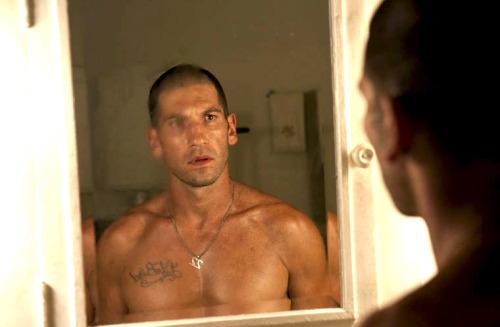 Shane lasted much longer on the television show, and has proven to be one of the most reliable characters. That is, not reliable in the story (of course), but his character, as acted by Joe Bernthal, is one of the more consistent and less stupid of anyone on screen. After the torrid first half that was spent whining and weeping over this lost girl, who was probably dead, Shane was the only one to think "Well, this little cunt is probably dead." That little cunt as it would turn out, was actually dead. Shane is the only character with any backbone.
The main opposition to Shane had always been the old man Dale, who among all the chaos had always held a consistent positive belief in Humanity. Through the bulk of "Judge, Jury, Executioner" (S2,E11), he serves as literally the only moral compass left in the group, the only one clinging to a faith in the good of people. This episode seems to counter this belief. The innocence and naïveté of Carl, who toys with and then refuses to shoot a Zombie trapped in some mud, as well as Dale's own curiosity and lack of a guard directly leads to his death. In light of this it seems as though Shane's philosophy should win.
Shane believes that the world has become cruel and humanity must in turn become cruel to deal with it. He's a Darwinist, capitalist, and an all-around badass. He is no longer trying to save humanity but rather to save a very select few, for personal and selfish reasons. He also tends to walk around looking like he's about to rape somebody. As amoral as he is, he has a consistent and well-articulated belief system and should have served as opposition to Dale in more of a Jack / Locke sense from LOST than they really found room to in this show.
 Looking around at other character philosophies is difficult. Carol is effectively completely useless and should be a corpse in the making. Ditto with T-Dog. Who yes, is still apparently the only Black Man in Georgia, and the only one to have a racial nickname that everyone else uses all the time. This is despite the comics' rich collection of fleshed out and important Black Characters. Carl is from what I can tell, basically autistic, although that may just be the acting. Glenn, always a backer of Dale and someone who believed in the good in people suddenly seems to only care about getting his dick wet, which somehow makes him less focused on protecting his girl, Maggie, who wavers between protecting her family and helping strangers constantly. Andrea is suicidal, but clearly inconsistent with that belief as well. I have no idea why Daryl is still around, he's clearly the only one who would be fine on his own and has no strong attachment to anyone in the group any longer. Even visions of his brother, who Rick left to die, suggest the same. While this is going on, his philosophy is largely unsaid, he's more of a weapon or tool that the others use to hunt Zombies, and not much else goes on in his head it would seem.
Hershel is interesting because he was clearly of the "Good in Humanity" side, even after that Humanity turned into Walkers. Shane effectively broke his once-firm resolve, though, destroying the patriarch of the land they are squatting on and making a clear path for Rick to become the unquestioned leader. Well, unquestioned outside of Shane. Rick is the worst offender out of anyone here. Ditto with Lori. What do they really want? It's almost impossible to tell. There isn't anything compelling about his character. It's a more believable character that he doesn't know what to do in some circumstances, but staggering to believe that he doesn't know what to do in ANY circumstance, or why anyone should follow his leadership. He rarely at any given point during A ZOMBIE APOCALYPSE even has any idea where his only son is. Lori also seems to waver on the idea of either saving herself and immediate family or looking out for the good of the group. They can't seem to understand, like Shane does, the possibility that these concepts are mutually exclusive or conversely like Dale does that they are not. There is no strong conviction between any of these characters.
So Dale is killed and that should have set up this great moral choice for Rick to perhaps, fill his shoes, despite the strong evidence that Shane's way of life is the new way of the world. If Rick were a strong character he could defend this proposition, build a side around himself and work to honour Dale's memory. Instead he's classically wishy-washy. When faced with Execution at Shane's hands, he convinces Shane to drop his guard, to have faith in him, as he has tried to do ever since he came back. In this moment, he's actually convinced Shane to have a little more faith in the Good of Humanity int he face of Armageddon. At this Rick reveals that he's really on Shane's side of the Morality Argument - that protecting an individual is more important than the survival of the group (losing Shane is losing someone who was actually training Carl, Andrea, a solid workhorse, and an ultimate defender of the homestead), as well as confidence in a higher morality or humanity. Shane's face as he dies is one of utter disbelief because of the viewpoint bait-and-switch Rick has just pulled. It's astounding. As Shane dies he must think, "So does the only integrity in this new world..."

It's a bold move. Shane and Dale were some of the only characters worth watching. No one else is really that captivating. At this point there isn't a tremendous amount of reasons to turn in again. It seems that the producers had planned for Shane's exit since Season 2 began, but they still offed him too early. He's far too much of an interesting character to die at all, really, as one of the few who knew Rick before the Apocalypse, and the focal point for not only so many storylines, but for so much of the philosophy, authenticity, and compelling moments of the show. His ghost will live on whenever Rick looks at Laurie's Baby, wondering if it is his or Shane's (of course, in the comics, those two didn't last much longer either, so who knows).
Despite its continuously clunky dialogue, incessantly stupid characters, and plodding, dopey plot that never seems to find any footing, The Walking Dead has managed a Golden Globe nomination, a third season, and a loyal fanbase, mostly filled up with people like me who just waited for Shane to scowl and off someone in any given episode. Now that that aspect is missing how will they recover? Rumours abound of The Governor being the Big Bad for Season 3. Will Rick be any more compelling without a hand? I hope so.
While it had some initial success, The Walking Dead in its most recent half-season of Season 2 has become one of the most watched shows ever on Cable Television. This is after years of an intricate, successful, and on-going comic run. There have been deviations certainly between the show and comic, one notably was the character of Shane, partner and rival of main dude Rick. In the comics Shane was offed pretty early on, by Rick's son, Carl protecting his pappy. In the comic world of Walking Dead, though, people tend to die all the time and through its run the only real mainstays have turned out to be Rick and Carl. The Show has had less of a turnover, at least until the last couple weeks of this season.
The main opposition to Shane had always been the old man Dale, who among all the chaos had always held a consistent positive belief in Humanity. Through the bulk of "Judge, Jury, Executioner" (S2,E11), he serves as literally the only moral compass left in the group, the only one clinging to a faith in the good of people. This episode seems to counter this belief. The innocence and naïveté of Carl, who toys with and then refuses to shoot a Zombie trapped in some mud, as well as Dale's own curiosity and lack of a guard directly leads to his death. In light of this it seems as though Shane's philosophy should win.
Shane believes that the world has become cruel and humanity must in turn become cruel to deal with it. He's a Darwinist, capitalist, and an all-around badass. He is no longer trying to save humanity but rather to save a very select few, for personal and selfish reasons. He also tends to walk around looking like he's about to rape somebody. As amoral as he is, he has a consistent and well-articulated belief system and should have served as opposition to Dale in more of a Jack / Locke sense from LOST than they really found room to in this show.

Hershel is interesting because he was clearly of the "Good in Humanity" side, even after that Humanity turned into Walkers. Shane effectively broke his once-firm resolve, though, destroying the patriarch of the land they are squatting on and making a clear path for Rick to become the unquestioned leader. Well, unquestioned outside of Shane. Rick is the worst offender out of anyone here. Ditto with Lori. What do they really want? It's almost impossible to tell. There isn't anything compelling about his character. It's a more believable character that he doesn't know what to do in some circumstances, but staggering to believe that he doesn't know what to do in ANY circumstance, or why anyone should follow his leadership. He rarely at any given point during A ZOMBIE APOCALYPSE even has any idea where his only son is. Lori also seems to waver on the idea of either saving herself and immediate family or looking out for the good of the group. They can't seem to understand, like Shane does, the possibility that these concepts are mutually exclusive or conversely like Dale does that they are not. There is no strong conviction between any of these characters.
So Dale is killed and that should have set up this great moral choice for Rick to perhaps, fill his shoes, despite the strong evidence that Shane's way of life is the new way of the world. If Rick were a strong character he could defend this proposition, build a side around himself and work to honour Dale's memory. Instead he's classically wishy-washy. When faced with Execution at Shane's hands, he convinces Shane to drop his guard, to have faith in him, as he has tried to do ever since he came back. In this moment, he's actually convinced Shane to have a little more faith in the Good of Humanity int he face of Armageddon. At this Rick reveals that he's really on Shane's side of the Morality Argument - that protecting an individual is more important than the survival of the group (losing Shane is losing someone who was actually training Carl, Andrea, a solid workhorse, and an ultimate defender of the homestead), as well as confidence in a higher morality or humanity. Shane's face as he dies is one of utter disbelief because of the viewpoint bait-and-switch Rick has just pulled. It's astounding. As Shane dies he must think, "So does the only integrity in this new world..."
It's a bold move. Shane and Dale were some of the only characters worth watching. No one else is really that captivating. At this point there isn't a tremendous amount of reasons to turn in again. It seems that the producers had planned for Shane's exit since Season 2 began, but they still offed him too early. He's far too much of an interesting character to die at all, really, as one of the few who knew Rick before the Apocalypse, and the focal point for not only so many storylines, but for so much of the philosophy, authenticity, and compelling moments of the show. His ghost will live on whenever Rick looks at Laurie's Baby, wondering if it is his or Shane's (of course, in the comics, those two didn't last much longer either, so who knows).
Despite its continuously clunky dialogue, incessantly stupid characters, and plodding, dopey plot that never seems to find any footing, The Walking Dead has managed a Golden Globe nomination, a third season, and a loyal fanbase, mostly filled up with people like me who just waited for Shane to scowl and off someone in any given episode. Now that that aspect is missing how will they recover? Rumours abound of The Governor being the Big Bad for Season 3. Will Rick be any more compelling without a hand? I hope so.